Standard stand
The most asked-for size: a 3/4 in thick device, a tight clearance.
- Device thick.
- 0.75″
- Clearance/side
- 0.1094″
- Wall height
- 1″
- Depth
- 4″
All values
Corner radius: 0.375″
Pad slot width: 0.125″
Pad slot length: 2.5″
Model LM-R03 · 3 common sizes
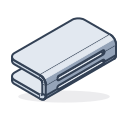
Custom-bent vertical laptop stand: width set from device thickness plus clearance, optional pad slots for anti-slip feet.
Price without signing up · Made in Quebec · $49 minimum order
A preset fills in the model; you then change each dimension in the application.
The most asked-for size: a 3/4 in thick device, a tight clearance.
Corner radius: 0.375″
Pad slot width: 0.125″
Pad slot length: 2.5″
With a case
A more generous clearance for a device in a sleeve or a case.
Corner radius: 0.5″
Pad slot width: 0.25″
Pad slot length: 3″
A solid base, no slot for an adhesive rubber strip.
Corner radius: 0.375″
Pad slot width: 0″
Pad slot length: 2.5″
Bending is built into the model. The rest is added in the application, with the same instant price.
Bending
Bend lines placed at the dimensions you set.
Tapping
Threads to suit material and thickness
PEM hardware
Nuts, studs, standoffs
Powder coating
Hard surface, UV stable
Anodizing
Aluminum, several colors
The shop’s notes for this model.
This stand holds a closed laptop upright, on its edge: a U channel whose two walls flank the machine and whose base carries it. Two same-direction bends, the same engine as a plain U channel, but sized like a desk accessory rather than a structural profile.
The inside width is not the laptop's bare thickness: it is that thickness plus a clearance, asked for separately, on each side. Zero clearance gives a stand the machine does not really fit into; a sleeve or a case changes the thickness you need to allow for completely.
Two optional slots run across the base to thread a strip of adhesive rubber, so the stand does not slide on the desk and the laptop does not sit on bare metal.
The top edge of both walls is radiused: this is a part hands touch when placing and removing the machine. Measure your closed laptop's thickness — sleeve or case included if you plan to leave it on — at its thickest point, usually near the hinge, then add the clearance you want on each side.
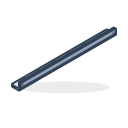
Cable comb with paired zip-tie slots, flat or bent into an L to screw to a wall or floor.
See the model →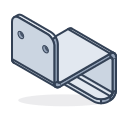
Three-bend headphone hanger shaped like a hook, with a generous cradle radius and a custom-drilled mounting plate.
See the model →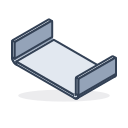
Custom-bent monitor riser: optional perforated top, two independent legs, height and depth sized to your desk.
See the model →Not quite it? Start from a basic shape or upload your drawing (DXF, DWG, SVG, AI, EPS) or your 3D model (STEP).
Configure one part or a series. See your price and lead time before ordering.
No account needed for pricing · Free shipping from $49