EPDM
The outdoor champion: impervious to UV, ozone and temperature swings, 60 durometer.
EPDM is the outdoor rubber. Where other elastomers crack, dry out or harden after a few Canadian winters, it stays flexible: UV rays, ozone, rain and temperature swings from -40°F to 250°F barely touch it. It’s the same material used for roofing membranes and car door seals — proof it can endure the weather for decades.
- Thicknesses2 thicknesses, from 1/16 in to 1/8 in
- ProcessCO₂ laser cutting
- Max. size44 × 30 in per part, from one part
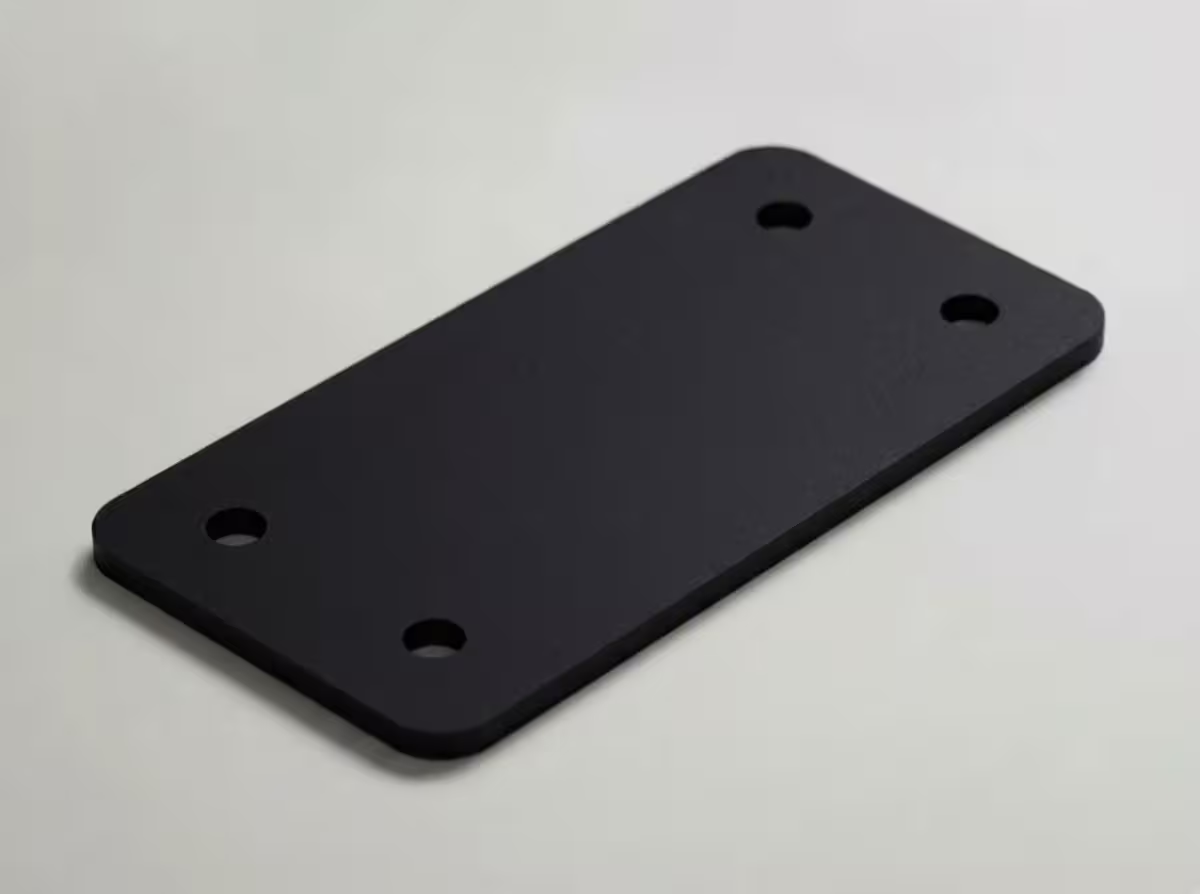
Laseo laser-cuts your EPDM gaskets, seals and pads directly from your drawing on our CO₂ laser. No die to have made, no tooling charges: a one-off replacement gasket costs the price of a gasket, not the price of a mould. Available in 1/16 and 1/8 in., 60 Shore A durometer (ASTM D2000 3BA608).
Key properties
Weather resistance: the best of all common rubbers — UV, ozone and oxidation have no effect. No cracking as it ages outdoors (ASTM D1149 ozone test: no cracking).
Temperature range: -40°F to +250°F continuous service; stays flexible through the coldest Canadian winter.
Water and steam: excellent sealing against water, steam and washdown solutions; a good choice for glycol-based coolants.
Hardness: 60 Shore A, 800 psi tensile — firm enough to bolt down, soft enough to conform to uneven surfaces. (Durometer measures firmness: 60 is about the feel of a pencil eraser.)
Its limit: oils, greases and fuels make it swell. For a gasket in contact with petroleum products, choose nitrile (NBR) instead.
Common applications
Door seals, hatch gaskets, access panel and outdoor enclosure weatherstripping.
Roofing details, flashings, rooftop HVAC units and municipal equipment sealing.
Water system gaskets, glycol cooling loops and equipment-washing systems.
Vibration pads and isolators for equipment that lives outside year-round.
Design tips
For a bolted gasket, aim for 20-30% compression of the thickness — 1/8 in. is more forgiving on uneven flange surfaces than 1/16 in.
Keep at least 0.035 in. of material between a hole and the gasket edge to avoid tearing when torqued.
Not sure which rubber? EPDM for outdoors, NBR for oil, silicone for heat, SBR for budget general-purpose work.
Get this material cut to your specs
Upload your drawing or use the sketch generator: pick the material, thickness and operations, and get your price on the spot.
Thicknesses and specifications — EPDM (Ethylene Propylene Diene)
Overview of available thicknesses and manufacturing capabilities for this material. The tabs above give full details per thickness.
View the thicknesses and tolerances table
| Thickness | Gauge | Cutting tolerance | Process |
|---|---|---|---|
| 0.063" | 1/16" | — | CO₂ laser |
| 0.125" | 1/8" | — | CO₂ laser |