Neoprene
The balanced all-rounder: handles both oils AND weather, available nylon-reinforced.
Neoprene is the Swiss Army knife of rubbers. It won’t beat nitrile on oil or EPDM on weather — but it does both honourably at the same time. When a gasket sees a bit of oil, a bit of sun, a bit of water and plenty of vibration, neoprene is almost always the right answer. That’s why you find it everywhere, from pipe clamps to machinery pads.
- Thicknesses2 thicknesses, from 1/16 in to 1/8 in
- ProcessCO₂ laser cutting
- Max. size44 × 30 in per part, from one part
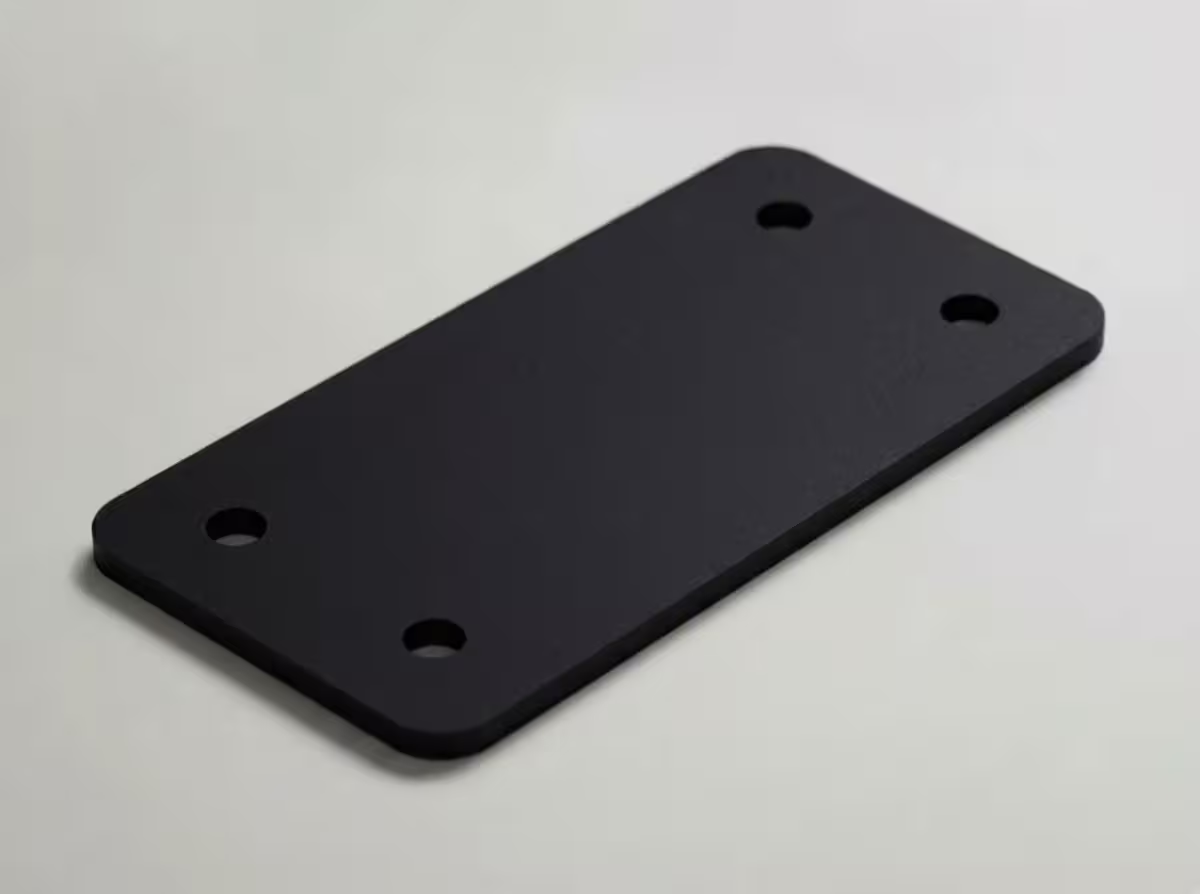
Laseo laser-cuts premium 60-durometer neoprene in 1/16 and 1/8 in. from your drawing, with no die charges. It’s also available nylon-reinforced, for tightly bolted joints that must resist tearing and creep.
Key properties
Versatility: moderate oil and grease tolerance, good UV, ozone and water resistance — the best overall balance of the common elastomers.
Temperature range: -20°F to +190°F (-29°C to +88°C); 1000 psi tensile strength, the highest of our rubbers.
Damping: excellent as a vibration isolator, shock pad and bearing pad; it absorbs without quickly taking a set.
Nylon-reinforced version: a nylon fabric ply inside the sheet blocks stretch and tearing (600 psi Mullen burst) — the choice for diaphragms and membranes, heavily bolted flanges, anchor washers and joints that get taken apart often. Its elastomer base handles -40°F to +250°F.
Flame: neoprene resists flame better than most rubbers (self-extinguishing, meets FMVSS302) — a plus in industrial settings.
Common applications
Machinery pads, vibration isolators and equipment feet.
Flange gaskets, pipe clamp liners and fitting seals.
Door and hatch sealing strips on mobile equipment.
Washers, shims and separators between dissimilar metals (limits galvanic corrosion).
Design tips
Standard gasket → premium neoprene; heavily bolted or tension-loaded joint → nylon-reinforced version.
Target compression: 20-30% of thickness for a solid gasket (the reinforced sheet compresses less — torque to spec rather than to crush).
Permanent oil contact? Move up to nitrile. Extreme outdoor exposure with no oil? EPDM will last longer.
Get this material cut to your specs
Upload your drawing or use the sketch generator: pick the material, thickness and operations, and get your price on the spot.
Thicknesses and specifications — Neoprene
Overview of available thicknesses and manufacturing capabilities for this material. The tabs above give full details per thickness.
View the thicknesses and tolerances table
| Thickness | Gauge | Cutting tolerance | Process |
|---|---|---|---|
| 0.063" | 1/16" | — | CO₂ laser |
| 0.125" | 1/8" | — | CO₂ laser |
| 0.063" | 1/16" | — | CO₂ laser |
| 0.125" | 1/8" | — | CO₂ laser |