Checker Plate - Stainless 304
Premium anti-slip surface: hygienic and rustproof, for kitchens, docks and corrosive environments.
When an anti-slip floor also has to be washable, sanitary, and chemical-proof, stainless 304 checker plate is the benchmark. It's the premium version of checker plate: the same raised grip as classic steel plate, but with no paint, no rust, and no compromise on hygiene.
- Thicknesses3 thicknesses, from 1/8 in to 1/4 in
- ProcessFiber laser cutting, ±0.005 in tolerance
- OperationsBending, stamped collar (dimple), laser engraving, powder coating
- Max. size44 × 30 in per part, from one part
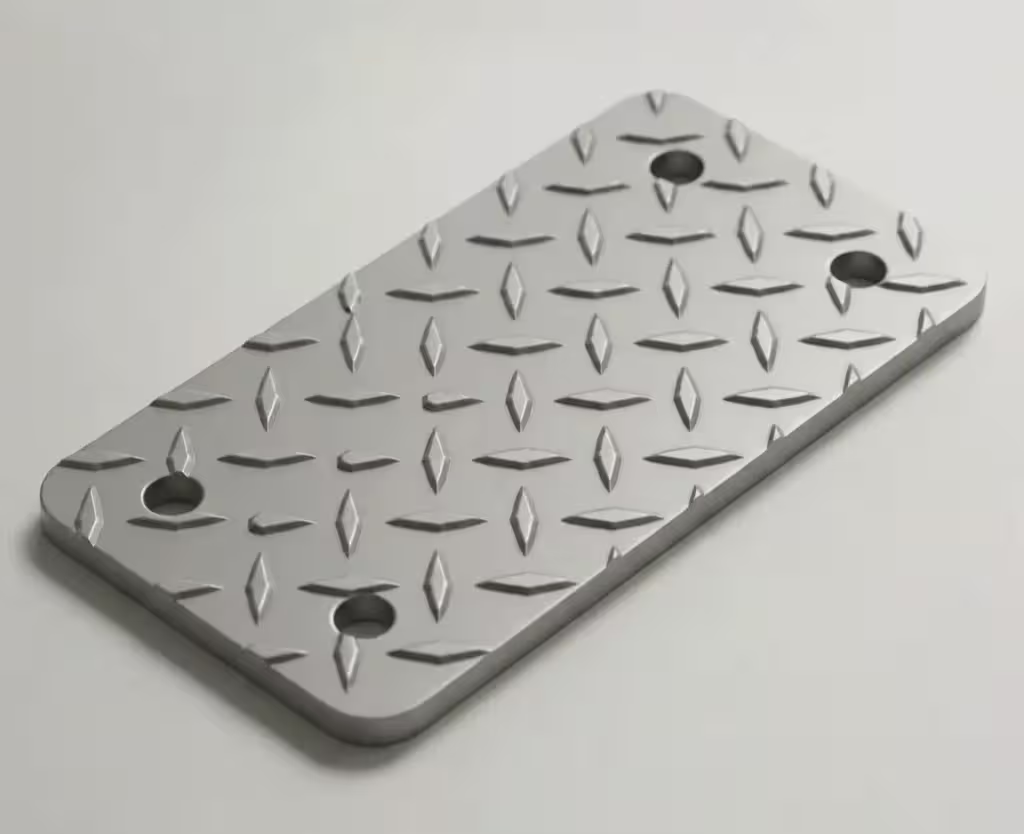
Laseo fiber laser cuts it to your exact dimensions in 1/8, 3/16 and 1/4 in. You'll find it in food-processing plants, commercial kitchens, breweries, salt-exposed loading docks, and mechanical rooms where floors are hosed down.
Key Characteristics
Alloy: stainless steel 304 (18% chromium, 8% nickel), the all-purpose grade of the food and chemical industries.
Hygiene: a non-porous surface, washable with industrial detergents and disinfectants without degrading — meets the requirements of food environments.
Corrosion: resists water, mild acids, wash-down chemicals, and road salt; no coating to maintain or redo.
Toughness: markedly more resistant than aluminum to abrasion and cart impacts; won't crush under rolling loads.
Fabrication: bendable in all three thicknesses, laser engravable for permanent identification.
Common Applications
Floors, steps, and walkways in food plants, dairies, and breweries.
Loading docks, landings, and ramps exposed to salt and frequent wash-downs.
Threshold plates and wall guards in hospitals and commercial kitchens.
Steps on chemical process equipment and water treatment stations.
Design Best Practices
The nominal thickness is that of the base: 1/8 in = 0.125 in without the raised pattern.
For outdoor use with heavy salt exposure (coastal, brine), tell us about your project — 316 can be sourced on request.
Tighter budget? Compare aluminum checker plate (lighter) and steel checker plate (more economical, needs paint).
Get this material cut to your specs
Upload your drawing or use the sketch generator: pick the material, thickness and operations, and get your price on the spot.
Thicknesses and specifications — Checker Plate - 304 Stainless Steel
Overview of available thicknesses and manufacturing capabilities for this material. The tabs above give full details per thickness.
View the thicknesses and tolerances table
| Thickness | Gauge | Cutting tolerance | Process | Bending (effective inside radius) |
|---|---|---|---|---|
| 0.125" | 1/8" | ±0.005" | Fiber laser | Yes (0.188") |
| 0.188" | 3/16" | ±0.005" | Fiber laser | Yes (0.250") |
| 0.250" | 1/4" | ±0.005" | Fiber laser | Yes (0.346") |
Available operations and finishes
This material is bendable (0.125", 0.188", 0.250"). Radii, K-factors and design rules in the bending guide.