Brass C260-H02 Half Hard
Copper-zinc alloy excellent for machining.
Ductile and stable copper-zinc alloy, brass delivers decorative and functional parts with a beautiful warm appearance: nameplates and signs, lettering, hardware, bushings and spacers, covers, dials, and lightweight components. Fiber laser cutting produces clean edges; CNC machining enables precise drilling, counterboring, and tapping.
- Thicknesses5 thicknesses, from 18 ga (0.040 in) to 1/4 in
- ProcessFiber laser cutting, ±0.005 in tolerance
- OperationsBending, tapping, stamped collar (dimple), laser engraving, countersinking
- Max. size35 × 47 in per part, from one part
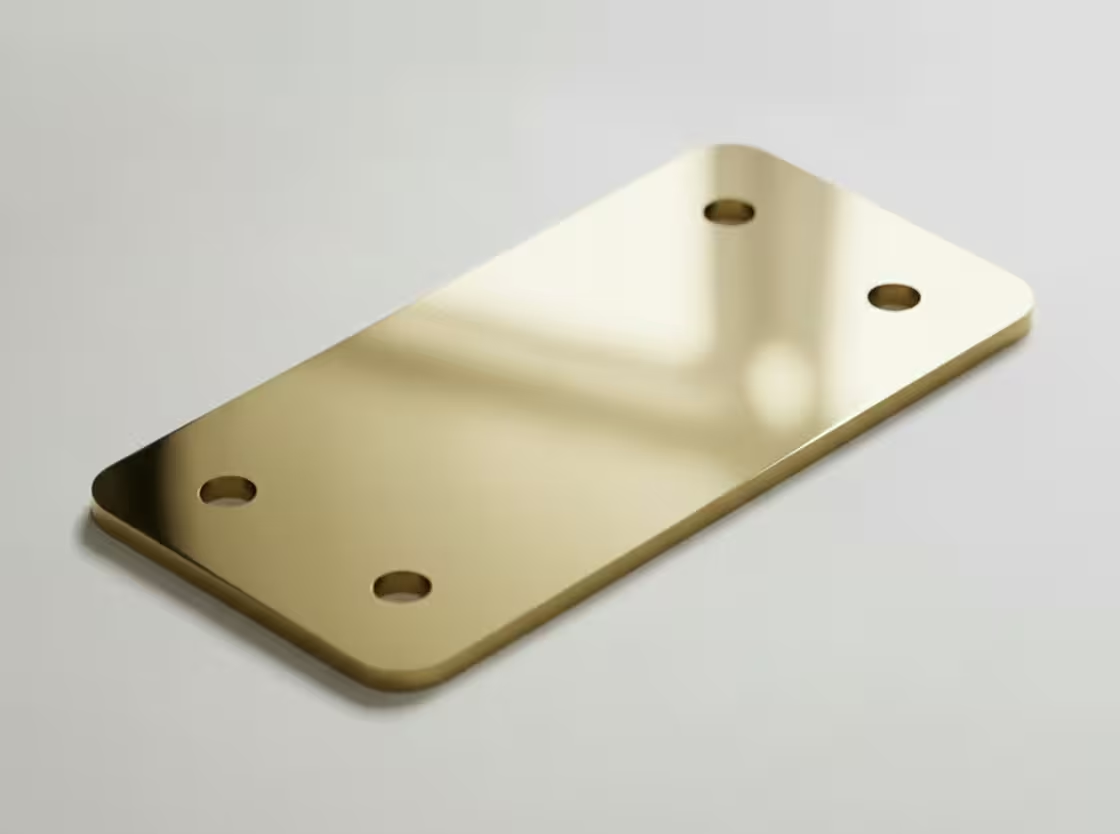
Good thermal and electrical conductivity, corrosion resistance in dry environments, excellent machinability, and uniform finish. The material can be brushed, polished, or varnished; it may tarnish naturally over time. Avoid ammonia-based or bleach-based cleaners and heavily chlorinated environments.
Key Characteristics
Finish: mill finish or brushed depending on availability; protective film possible to preserve surface during machining and handling.
Cut orientation: the visible face in the rendering is treated as the top; machining recommended with film in place when applicable.
Process: fiber laser cutting and/or CNC machining (typical tolerance ±0.005").
Holding tabs: small tabs may remain on the perimeter; removal by light deburring.
Oxidation: may develop a patina; apply clear varnish or protective oil to maintain luster.
Chemical compatibility: good in dry atmosphere and with light oils; avoid: ammonia/ammoniacal solutions, chlorinated agents (bleach), strong acids.
Operating temperature: ambient; avoid continuous heat and highly corrosive environments.
Common Applications
Nameplates and decorative signs, premium signage, lettering.
Decorative hardware: handles, brackets, covers, light fittings.
Spacers, washers, bushings, and small machined parts.
Light electrical/thermal components, dials, and instrumentation parts.
Design Best Practices
Provide small internal radii rather than sharp corners to limit stress concentrations and improve cut quality.
Anticipate desired finish (brushing, polishing, varnish) and protect visible surfaces during assembly.
Common assembly: fasteners, brazing/soldering, tapped threads; structural adhesive bonding (epoxy) possible if needed.
Limit local heating during prolonged machining; deburr and lightly break edges for a clean finish.
Get this material cut to your specs
Upload your drawing or use the sketch generator: pick the material, thickness and operations, and get your price on the spot.
Thicknesses and specifications — Brass C260-H02 Half Hard
Overview of available thicknesses and manufacturing capabilities for this material. The tabs above give full details per thickness.
View the thicknesses and tolerances table
| Thickness | Gauge | Cutting tolerance | Process | Bending (effective inside radius) |
|---|---|---|---|---|
| 0.040" | 18 Gauge | ±0.005" | Fiber laser | Yes (0.039") |
| 0.0781" | 14 Gauge | ±0.005" | Fiber laser | Yes (0.047") |
| 0.1285" | 8 Gauge | ±0.005" | Fiber laser | Yes (0.157") |
| 0.1875" | 3/16" | ±0.005" | Fiber laser | Yes (0.157") |
| 0.250" | 1/4" | ±0.005" | Fiber laser | Yes (0.312") |
Available operations and finishes
This material is bendable (0.040", 0.0781", 0.1285", 0.1875", 0.250"). Radii, K-factors and design rules in the bending guide.