Checker Plate - Aluminum
Lightweight anti-slip surface that never rusts: running boards, ramps and truck boxes.
Aluminum checker plate — also known as diamond tread plate, embossed plate, or floor plate — combines a raised anti-slip surface with the light weight of aluminum. At roughly one-third the weight of steel, it's a one-person material, never rusts, and keeps its shine even when exposed to road salt.
- Thicknesses3 thicknesses, from 1/8 in to 1/4 in
- ProcessFiber laser cutting, ±0.005 in tolerance
- OperationsBending, tapping, stamped collar (dimple), countersinking, laser engraving, anodizing, powder coating
- Max. size44 × 30 in per part, from one part
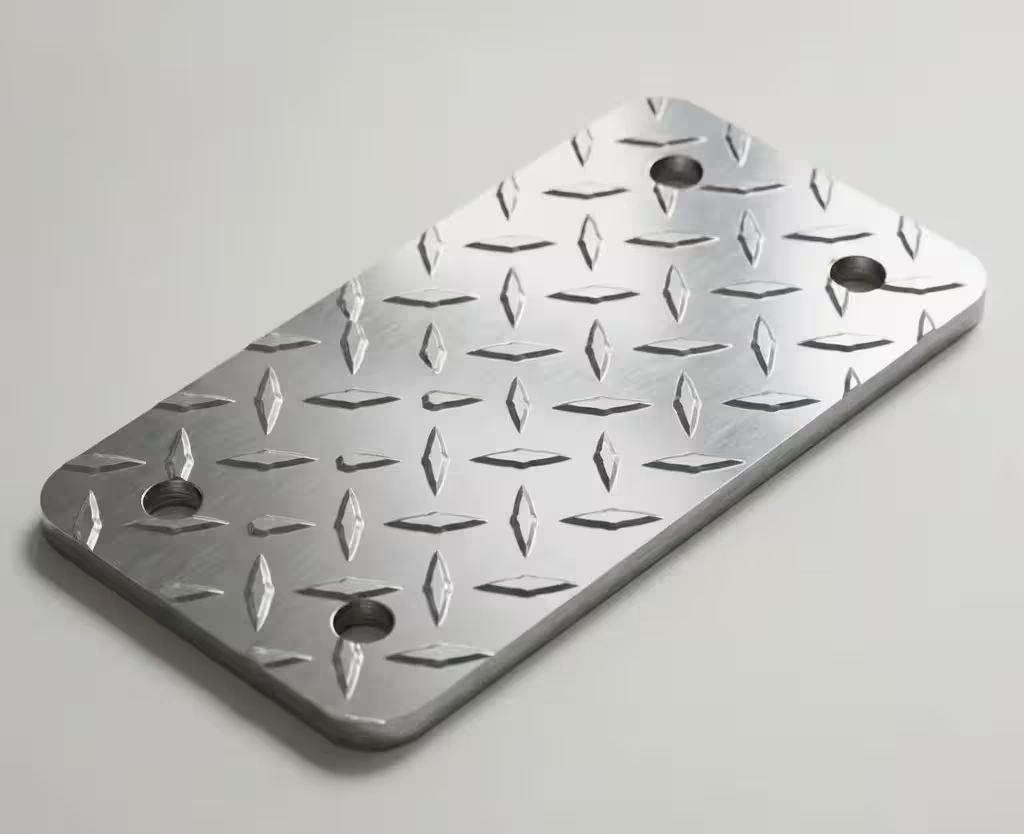
Laseo fiber laser cuts it to your exact dimensions: truck steps, trailer and van floors, wall guards, access ramps, tool boxes. Available in 1/8, 3/16 and 1/4 in thickness (plate thickness, pattern on top), with bending, tapping, countersinking, and anodizing available online.
Key Characteristics
Alloy: aluminum 3003-H14, the standard alloy for tread plate — good formability, excellent corrosion resistance, bright surface.
Anti-slip: the raised diamond pattern grips wet, muddy, or snowy boots — both along the pattern and across it.
Featherweight: about 1.8 lb/ft² in 1/8 in, versus 4.9 lb/ft² for the same plate in steel. Ideal when every pound counts (trailers, RVs, boats).
Zero rust: no paint or maintenance required; the pattern can also be anodized to harden the surface.
Fabrication: bendable in all three thicknesses (pattern preferably facing the outside of the bend), tappable, countersinkable for flat-head screws.
Common Applications
Steps, treads, and thresholds on trucks, trailers, and machinery.
Floors in cargo vans, enclosed trailers, and boat decks.
Wall guards and kick plates in garages, workshops, commercial kitchens, and elevators.
Truck beds, tool boxes, and decorative industrial-style trim.
Design Best Practices
Measure the plate thickness without the pattern: 1/8 in means a 0.125 in base, and the raised pattern adds about 0.060 in.
For a floor, 1/8 in is enough over closely spaced supports; step up to 3/16 or 1/4 in for rolling loads or longer spans.
Compare with steel checker plate (stiffer, cheaper, needs paint) and stainless 304 checker plate (hygienic, corrosive environments).
Get this material cut to your specs
Upload your drawing or use the sketch generator: pick the material, thickness and operations, and get your price on the spot.
Thicknesses and specifications — Checker Plate - Aluminum 3003-H14
Overview of available thicknesses and manufacturing capabilities for this material. The tabs above give full details per thickness.
View the thicknesses and tolerances table
| Thickness | Gauge | Cutting tolerance | Process | Bending (effective inside radius) |
|---|---|---|---|---|
| 0.125" | 1/8" | ±0.005" | Fiber laser | Yes (0.157") |
| 0.188" | 3/16" | ±0.005" | Fiber laser | Yes (0.157") |
| 0.250" | 1/4" | ±0.005" | Fiber laser | Yes (0.312") |
Available operations and finishes
This material is bendable (0.125", 0.188", 0.250"). Radii, K-factors and design rules in the bending guide.